
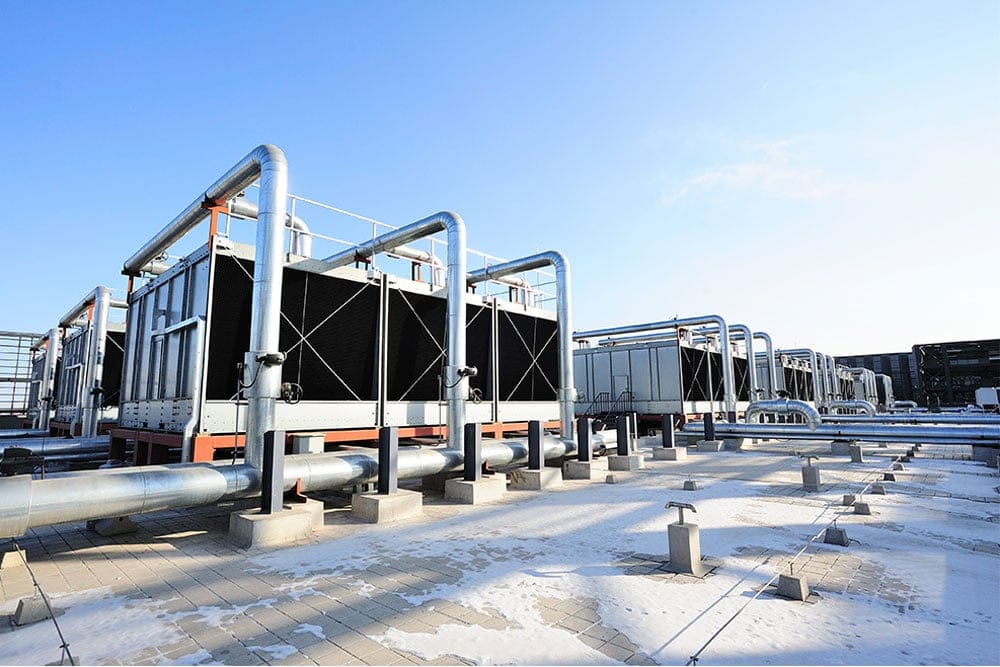
Summer in Ohio and Northern Kentucky puts real strain on commercial cooling equipment. Heat and humidity build together for weeks at a time, and rooftop units sized for average conditions get pushed past their comfort zone. When a system fails in July, the cost is never just the repair bill. It is lost productivity, uncomfortable tenants, and in some buildings, spoiled inventory.
A planned commercial air conditioning maintenance schedule catches small problems before they turn into five-figure emergencies. Here is what facility managers and building owners should check before peak demand hits, and why timing matters as much as the tasks themselves.
Key Takeaways
- Ohio and Northern Kentucky summers combine high heat and high humidity, which puts extra strain on commercial cooling systems beyond what temperature alone would suggest.
- Coil cleaning, refrigerant checks, filter changes, and condensate drain clearing are the four maintenance tasks most likely to prevent a mid-summer breakdown.
- Rooftop units, blower motors, and electrical components should be inspected before peak demand, not after a problem appears.
- Preventive commercial cooling maintenance lowers energy use, reduces emergency calls, and makes facility budgets more predictable.
Why Summer Heat and Humidity in Ohio and Northern Kentucky Push Commercial Cooling Systems Harder
The Ohio Valley climate is not just hot. It is humid, and that combination is harder on mechanical systems than dry heat of the same temperature. When outdoor humidity stays high, a cooling system has to pull moisture out of the air in addition to lowering the temperature. That extra latent load means longer run times, less recovery time between cycles, and more wear on compressors and condenser fans.
In Cincinnati, Dayton, Columbus, and Northern Kentucky, stretches of 90-degree days with high dew points are common from June through August. Overnight temperatures often stay warm enough that condensers never get a real break. For multi-tenant offices, retail centers, restaurants, and light industrial buildings, that means commercial HVACR maintenance cannot wait for a system to show obvious signs of trouble. By the time a unit is short-cycling or blowing warm air, it has usually been working too hard for weeks.
Core Maintenance Tasks: Coil Cleaning, Refrigerant Checks, Filter Changes, and Condensate Drain Clearing
Four tasks account for most of the difference between a system that makes it through August and one that does not.
- Coil Cleaning: Dirt and debris on condenser coils reduce heat rejection, which forces the compressor to work harder to reach the same cooling output. Dirty coils are one of the most common, and most preventable, causes of summer breakdowns.
- Refrigerant Checks: A slow leak that goes unnoticed drops system capacity and can damage the compressor over time. A proper commercial AC maintenance visit checks charge levels and looks for the source of any loss, not just topping off the refrigerant.
- Filter Changes: Clogged filters restrict airflow, cut cooling capacity, and put extra strain on blower motors. They also drag down indoor air quality (IAQ) for everyone in the building.
- Condensate Drain Clearing: Humid months produce more condensate than usual. A clogged drain line can trip safety switches, shut the system down, or cause water damage before anyone notices.
None of these tasks require major capital investment. They require a schedule, and someone who checks them before the first heat wave, not after.
Our preventive maintenance programs are built around your specific equipment, usage patterns, and building type, not a generic checklist. If your last inspection was more than six months ago, now is the time to get ahead of it. Schedule a system assessment with an Enervise technician before peak season hits.
Inspecting Rooftop Units, Blower Motors, and Electrical Components Before Peak Demand
A pre-season inspection should go beyond coils and filters. Rooftop units (RTUs) take a beating from weather exposure, so cabinet seals, curb flashing, and corrosion points deserve a look before seasons change, not during it. Belts and bearings on blower motors wear down gradually, and a motor running under strain in July is far more likely to fail than one that was checked and adjusted in April or May.
Electrical components deserve particular attention. Capacitors and contactors are common failure points once ambient temperatures climb, and loose electrical connections from months of thermal cycling can cause intermittent faults that are hard to diagnose after the fact. If your building runs on a building management system (BMS), confirming that control points and safety interlocks communicate correctly matters just as much as the mechanical inspection. A unit that is mechanically sound but reporting bad data to the BMS can still leave a space uncomfortable, or run longer than it needs to.
How Preventive Cooling Maintenance Lowers Energy Use and Avoids Mid-Summer Failures
Dirty coils, clogged filters, and low refrigerant charge all force a system to run longer to deliver the same cooling. That shows up directly on the utility bill. Summer HVAC maintenance done ahead of peak season typically pays for itself in lower energy use alone, before factoring in the cost of an emergency repair or the lost revenue from a shut-down space.
Preventive maintenance also changes the type of service call a building gets. Instead of an emergency dispatch during the hottest week of the year, facility teams get a scheduled visit, a clear scope, and a predictable cost. When something does go wrong despite regular maintenance, our Repair Right™ guarantee and 24/7 emergency response mean a fast, accountable fix rather than a long wait for the next available technician. Because we handle HVACR, plumbing, and controls in-house, one team can address the mechanical system and anything connected to it, rather than coordinating between three separate vendors.
Frequently Asked Questions
How Often Should Commercial Air Conditioning Systems Be Serviced?
Most commercial systems benefit from at least two scheduled visits per year, one before summer and one before winter, with more frequent checks for older equipment or buildings with heavy usage. A pre-season commercial air conditioning maintenance visit is the one that matters most for avoiding summer breakdowns.
What Maintenance Keeps Commercial AC Running in Hot, Humid Weather?
Coil cleaning, refrigerant charge verification, filter changes, and condensate drain clearing address the four most common causes of summer failures. Adding an inspection of blower motors and electrical components before peak demand rounds out a complete commercial cooling maintenance visit.
Why Do Commercial Cooling Systems Fail During Summer?
Most summer failures trace back to a system that has been running at or near capacity for weeks without a break. Dirty coils, low refrigerant, clogged filters, and worn electrical components all reduce a system’s margin for error, and high humidity adds extra load on top of high temperatures.
When Should Ohio and Northern Kentucky Businesses Schedule Cooling Maintenance?
Late spring, before the first stretch of 90-degree days, is the ideal window. Scheduling commercial hvac maintenance in April or May gives technicians time to order parts if something needs replacing, rather than scrambling during an emergency call in July.
Ready to Get Ahead of Summer
A commercial air conditioning maintenance plan built around your building’s actual equipment and usage is the difference between a scheduled visit in May and an emergency call in July. Our team handles HVACR, plumbing, and controls in-house, backed by 24/7 response and our Repair Right™ guarantee.
Schedule your pre-summer system assessment with Enervise today.


